Overview:
My dissertation examines how environmental conditions—particularly heat and disasters—affect violence against women, and how social connectedness at multiple scales shape health vulnerability during heat waves. I use Spain as a case study, leveraging a wide range of publicly available data sources as well as primary data that I collected from the first two heat waves of the summer of 2025 on Spain’s five largest cities.
Chapter 1: Seasonality, Extreme Heat, and Intimate Partner Violence
Abstract
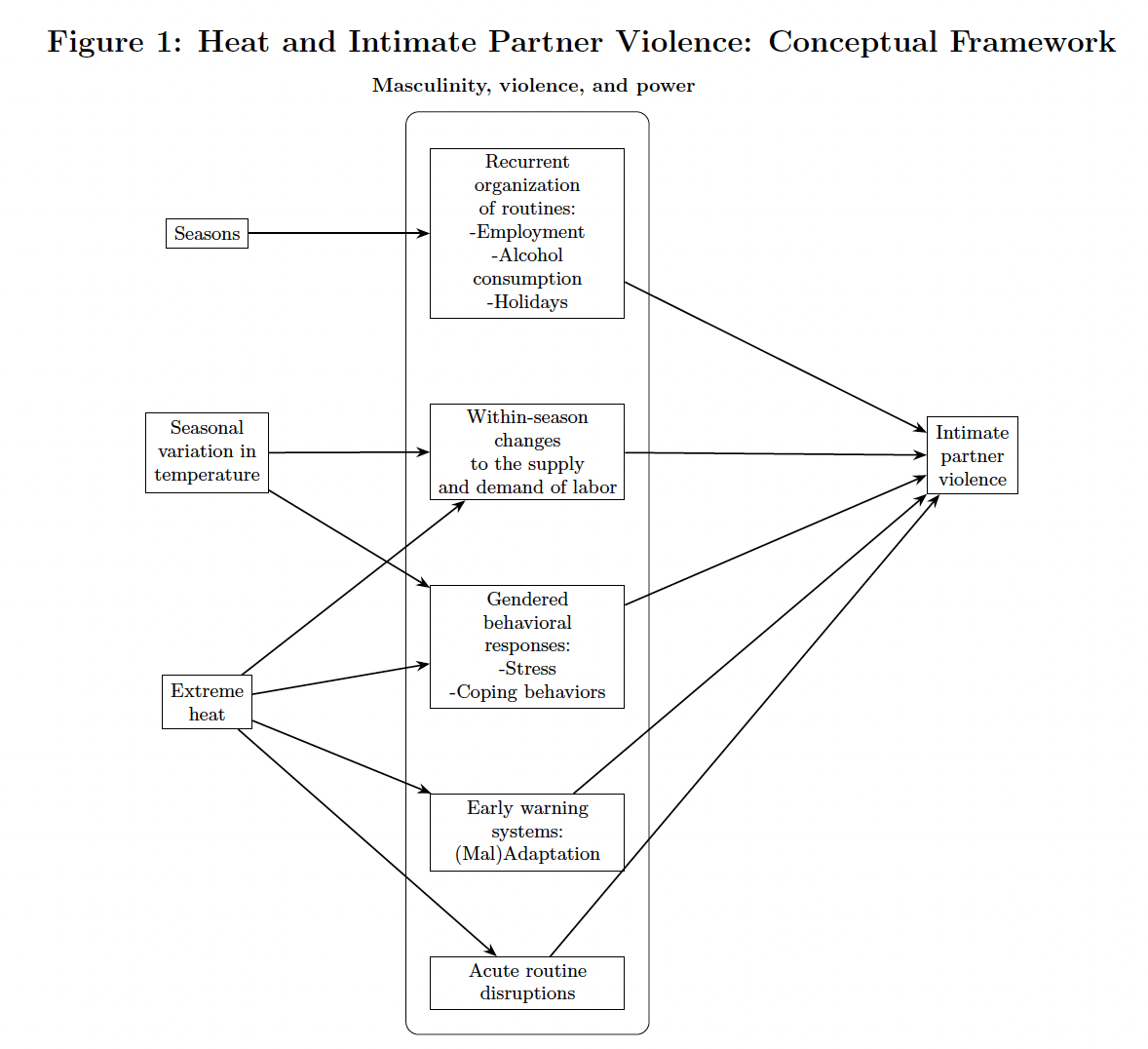
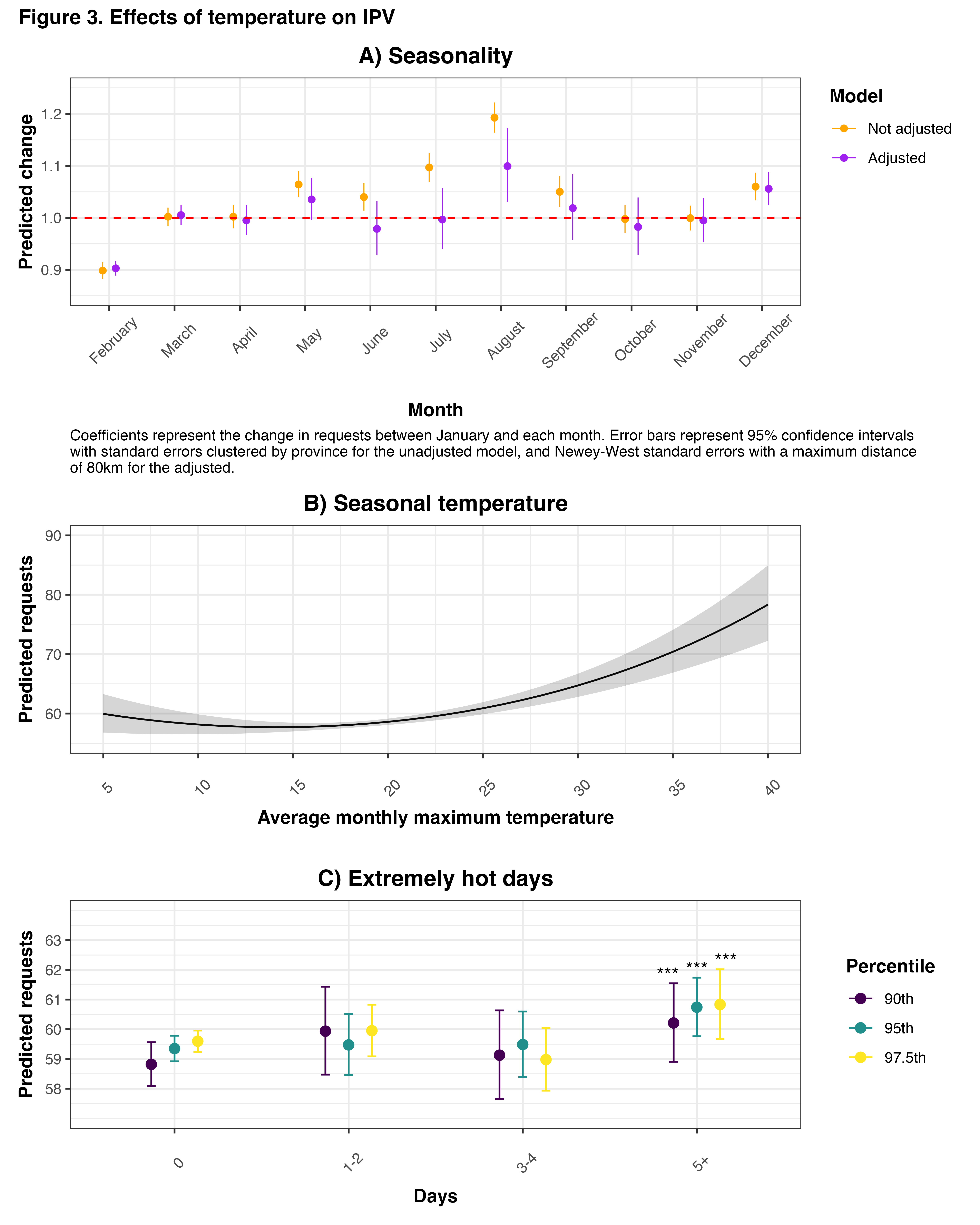
Climate change is increasing individuals’ exposure to hot temperatures, which can exacerbate intimate partner violence (IPV) through biological, contextual, and behavioral pathways. Existing research on this topic treats temperature as an undifferentiated exposure, assuming its effect are the same regardless of the form in which they take place. This paper develops a framework to understand how seasons, seasonal temperatures, and extreme heat can lead to gendered contexts and behavioral responses that can shape IPV. Using monthly province-level IPV hotline request data from Spain (2008–2024; n = 10,605), ERA5 temperature estimates, and two-way fixed-effects regression models, I estimate how requests vary across seasons, and the causal effect of seasonal temperature and extreme heat on requests. Results reveal a reinforcing interaction between temperature and requests. Requests are higher during the summer and the end of the year. Increases in seasonal temperatures decrease requests in the coldest months and cause exponential increases in requests during mild and hotter months. Exposure to extreme heat also causes increases in requests, but its effect is smaller than that of seasonal temperature, possibly due to differences in adaptation. Additional exploratory analyses suggest sleep disruption and household beer consumption as plausible mechanisms behind these relationships. These findings show that climate change may increase IPV by making the Earth, on average, warmer, by increasing the length of summers, and making extreme heat more frequent. Thus, climate change could be a future driver of gender inequality.
Chapter 2: Lonely in the Heat: Social Connectedness and Vulnerability to Extreme Heat
Abstract
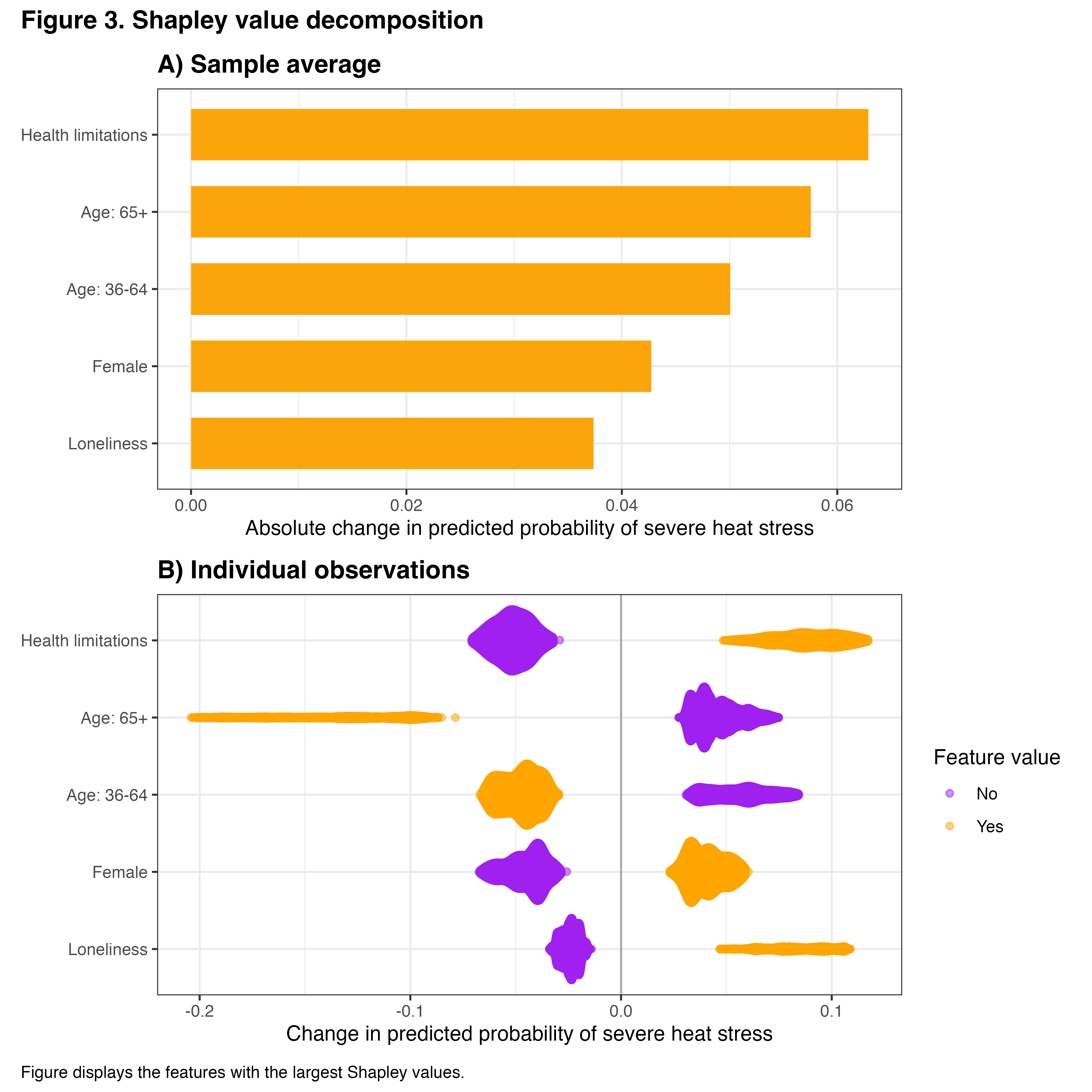
Social connectedness is considered a source of resilience during heat waves. But which types of connection reduce vulnerability to heat, through what mechanisms, and by how much? I answer these questions using novel survey data collected after the first two heat waves of the summer of 2025 in Spain (n = 11,791), logistic regression models, and Shapley value decompositions. Results show that social connectedness is not an omnibus source of resilience. Instead, it is associated with both decreases and increases in the risk of heat stress (measured by individuals’ experience of symptoms of heat illnesses). Further, while access to social resources contributes little to the risk of heat stress, individuals’ appraisal of those resources contributes almost as much as other characteristics like age and gender. These findings suggest that vulnerability to extreme temperatures is driven less so by the objective structure of people’s connectedness than their perceptions about it.
Chapter 3: The Effect of Disasters on Intimate Partner Violence
Abstract
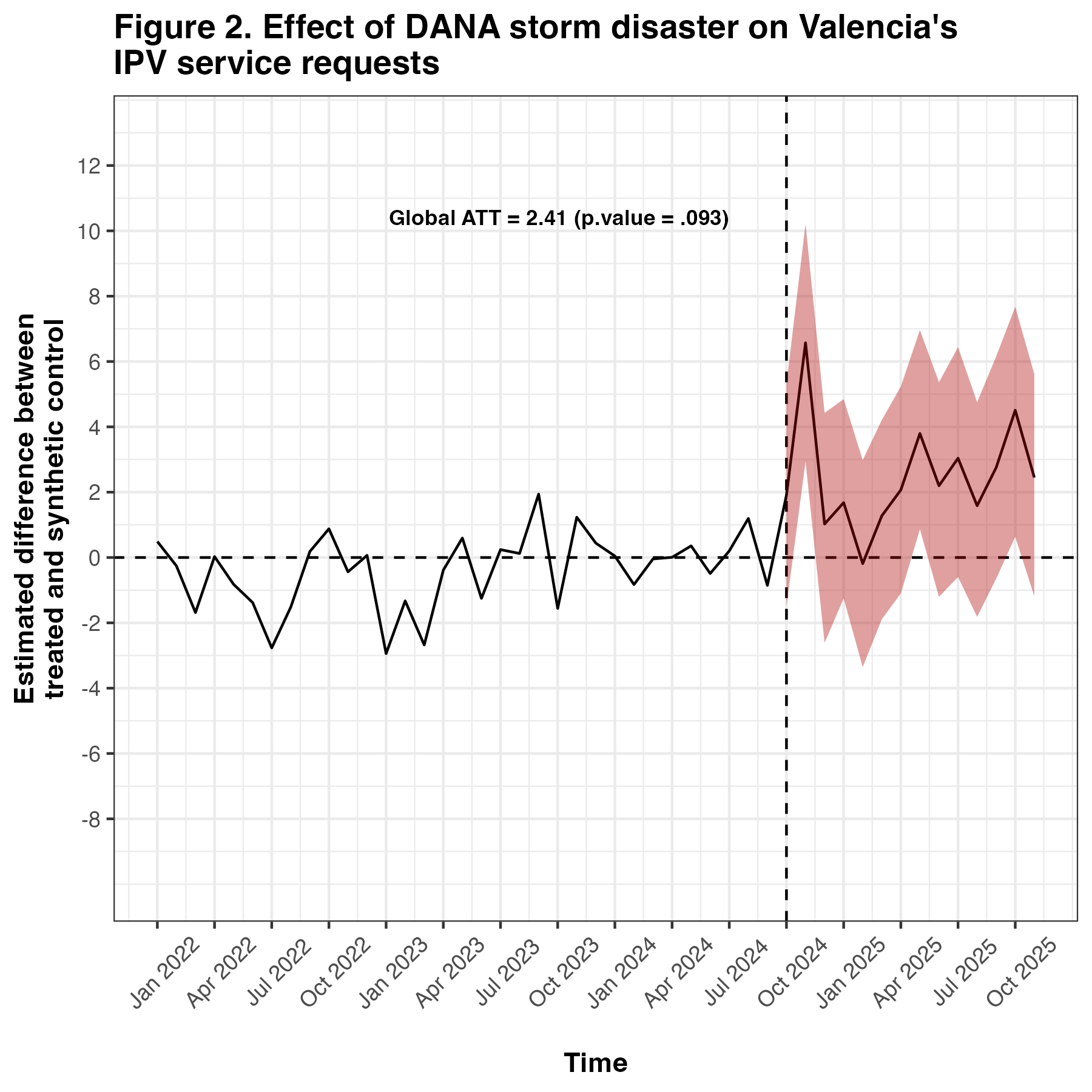
Disasters can lead to contexts that exacerbate intimate partner violence (IPV). Yet, evidence on this topic is mixed, predominantly due to data constraints. In this study, I estimate the causal effect of a disaster on IPV from the date the event took place until a year after. I use the disaster induced by the Dana storm in Valencia, Spain, in October 2024 as a case study. To do this, I leverage monthly IPV service request data from the Spanish Ministry of Gender and Equality and a Residualized Augmented Synthetic Control Estimator that allows me to estimate counterfactual counts of IPV requests in Valencia in the absence of the disaster. Results reveal a dynamic treatment effect of disasters on IPV. The disaster caused a 41% increase in requests immediately after it took place, and it left a scarring, albeit noisy, effect that persisted at least a year.